
Why Professional Women Are Working From Hotel Lobbies Now
Hotels figured out what coworking spaces didn't: professional women pay for beauty and silence, not networking opportunities. They're booking environments where thoughts have room to expand.
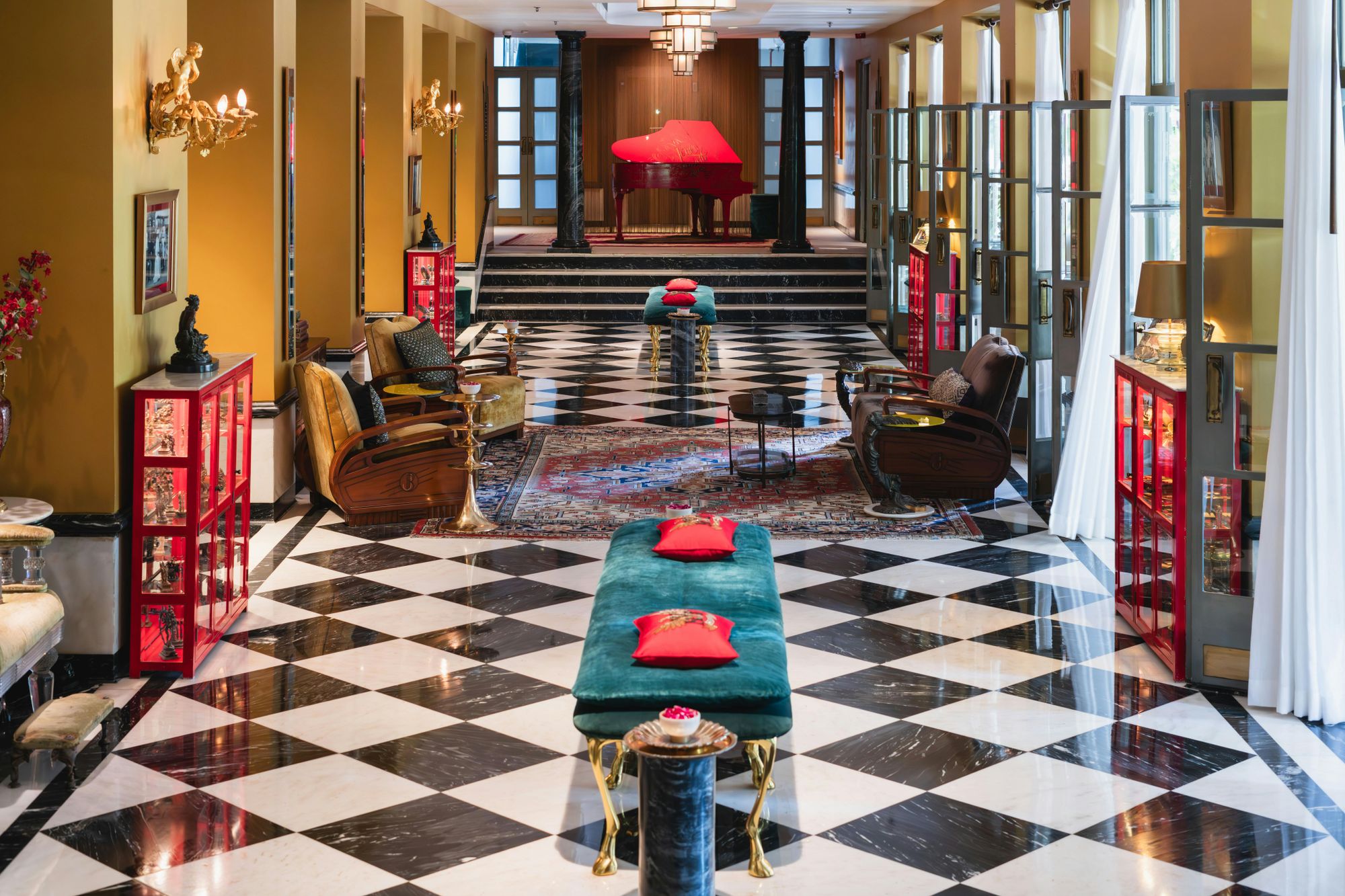
Hotel lobbies used to be transitional spaces; now they are somewhere women choose to stay. By mid-morning, low marble tables are dotted with laptops, coffee cups are replaced before they cool, and the atmosphere carries the quiet concentration of a workspace that happens to be beautifully designed. No one looks hurried. No one looks apologetic. The room holds its own tempo.
Part of the appeal is relief. Professional women make decisions all day long, often before they’ve finished their first coffee. What to approve, what to push back on, what to solve, what to absorb. Travel has not been immune from that fatigue. Increasingly, women are choosing environments that reduce the number of micro-choices they have to make, whether that’s on holiday or during an ordinary Tuesday morning. A hotel lobby, when chosen deliberately, does exactly that.
There is something honest about the transaction. A day pass purchased, a seat taken, a space earned. Unlike a café, there is no sense of overstaying. Unlike a coworking floor, there is no pressure to perform productivity. The exchange is clear and contained. The lighting has already been considered. The furniture has already been placed for comfort. The music is calibrated to presence rather than distraction. You arrive and begin.
The design matters more than most workspace operators like to admit. Natural light falling across stone floors changes the pace of thinking. High ceilings create visual room before any work has even started. Beauty, in this context, is not decorative; it becomes functional. When the environment is calm, the mind follows. More and more travellers say they choose hotels that reflect their identity and values, and that same instinct now applies to where they choose to work. The setting is no longer incidental to output. It shapes it.
What’s noticeable is who feels at ease in these rooms. Women in structured jackets taking calls without lowering their voices. Others editing documents slowly, deliberately, unbothered by the movement around them. There is no scramble for sockets, no territorial hovering. The space absorbs activity without amplifying it. Productivity looks composed rather than frantic.
This shift says something subtle about how work itself is being renegotiated. Open offices promised collaboration. Coworking spaces promised community. Both often delivered noise. Hotel lobbies offer something simpler: a room that expects nothing from you except presence. There is no icebreaker, no hot-desk politics, no performative networking. Just atmosphere, held steadily in place.
The most successful properties understand this intuitively. They are not selling faster WiFi or more meeting pods. They are selling containment. A place where thoughts can stretch without interruption and decisions can be made without background friction. When that becomes the priority, the lobby stops being a waiting area and starts functioning as infrastructure.
Once women experience that difference, it becomes difficult to return to fluorescent spaces designed for density over depth. The shift is quiet but tangible. Work still happens. Deadlines still exist. But the edge softens slightly, and with it comes a different quality of focus. The lobby does not announce itself as a solution. It simply makes the day feel more deliberate.