The Lounge Has a Dress Code. It Just Doesn't Post It.
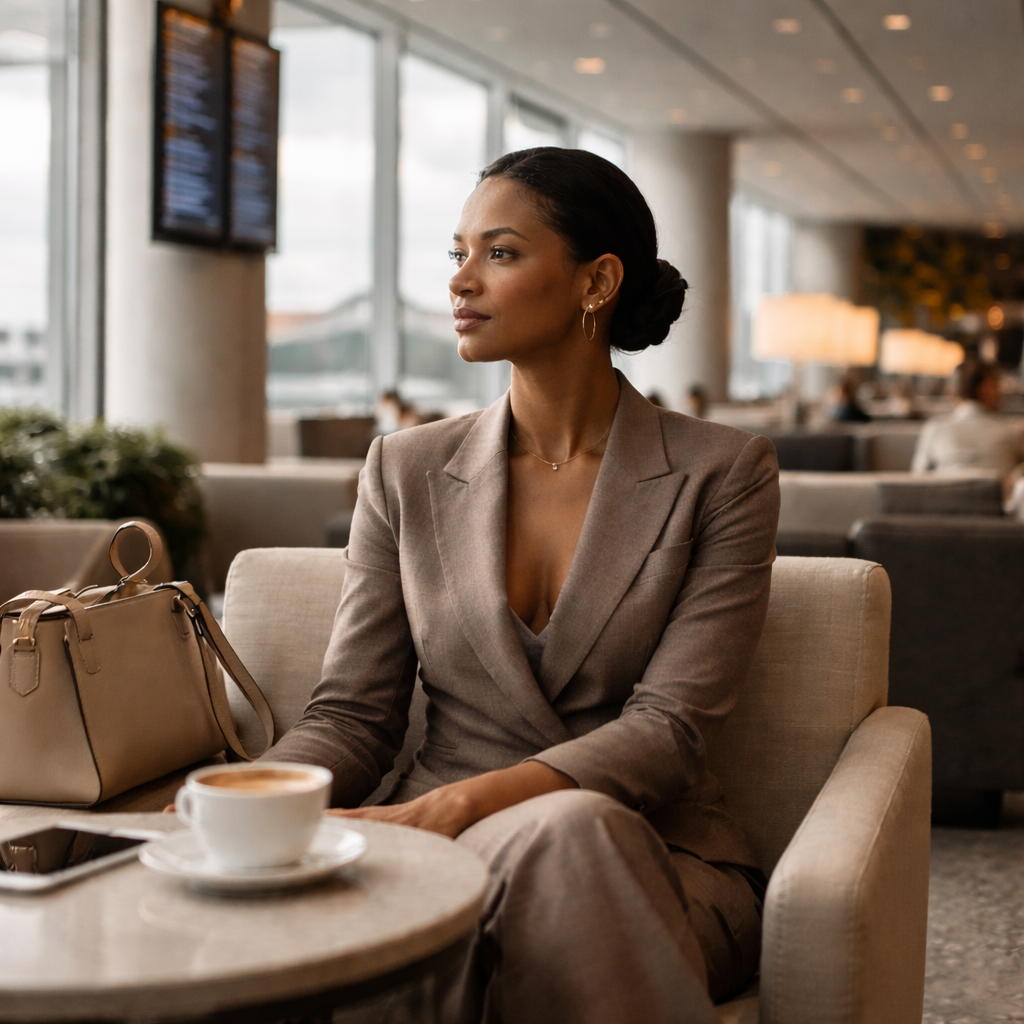
The stratification of lounge access has produced an unexpected side effect. As credit card products and day passes have opened up rooms that previously required years of airline tier accumulation, the visual environment inside those rooms has changed. The women who have been in both know exactly what the difference feels like. The ones who haven't yet are about to find out.
What the Status-Tier Lounge Is Actually Doing
The Centurion, the Qatar Al Mourjan, the Cathay First. These rooms operate on a specific visual logic: restraint in colour, precision in fit, specificity in material. Acoustic control. A palette that does not compete for attention. The environment is doing deliberate work, removing cognitive load rather than adding stimulation. What people wear inside them follows the same code almost without instruction. Structured tailoring. Neutral weight. Nothing that requires managing.
This is not a coincidence. The room selects for it and the women already fluent in that register show up accordingly.
What the Democratised Lounge Is Doing Instead
The BlueHouse at JFK Terminal 5, the Capital One at Terminal 4, Air France's new Terminal 4 space at Heathrow. These are genuinely good rooms and the day pass model means the demographic inside them is wider and less legible than the status-tier equivalent. The visual environment reflects that. More varied palettes, more range in formality, a less consistent read on who is in the room and why.
This is not a criticism. It is useful information. The democratised lounge is producing a different kind of preparation environment, one that requires the woman who knows what she is doing to bring her own coherence rather than absorbing it from the room. The outdoor space at BlueHouse offers something the Centurion does not. The tradeoff is environmental consistency.
The Practical Read
The competence aesthetic that travels well across both tiers is the same one that works from lounge to boarding to first meeting without adjustment. Architectural tailoring, technical fabric, a silhouette that holds its shape across a twelve-hour travel day. Footwear that moves without requiring a change. Nothing that signals effort, because effort is not the point.
The spring 2026 runway landed on neo-minimalism almost precisely because the clothes needed to work in these environments. Sculptural silhouettes, sharp seams, neutral palettes. The fashion industry named what the rooms had already been selecting for. Women routing through both lounge tiers in the same week had already worked this out.
The Intelligence Gap
Knowing which room you are walking into changes what you wear and how you read everyone else in it. The status-tier lounge operates as a relatively closed visual system. The democratised lounge requires more active calibration. Neither is the wrong choice, and the stack that combines both across a single trip is increasingly standard for professional women who move frequently.
The codes are consistent. The rooms are just asking you to bring them yourself now.