
Women Shape Luxury Travel: New Insights
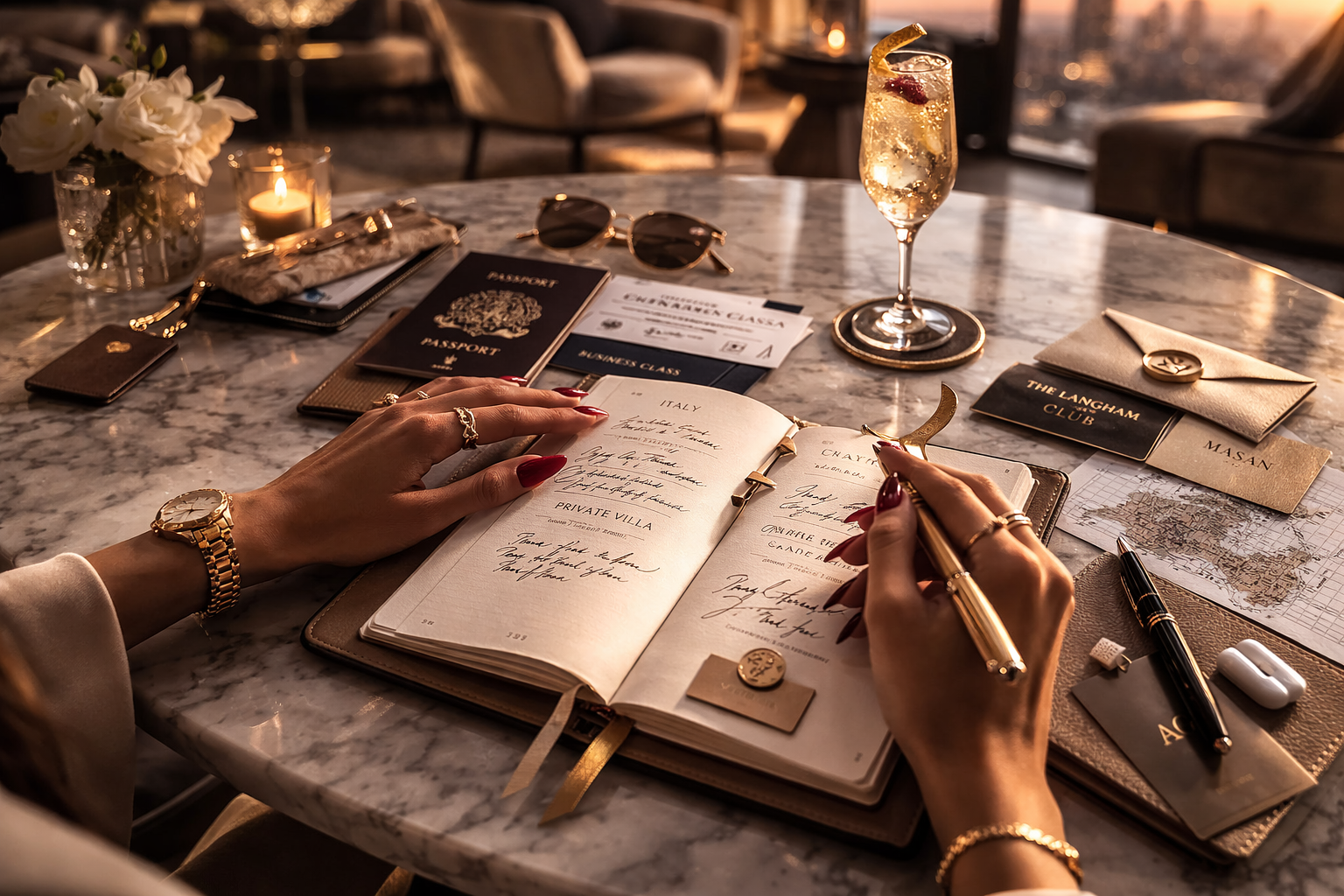
New data confirms what the rooms have been quietly signalling for some time.
A survey published by Nexion Travel Group in March 2026 found that 64% of luxury travel bookings made by high-performing female travel advisors were placed by women, with a further 15% from female group travel. Close to eight in ten premium travel decisions, shaped by women. The luxury travel industry has spent considerable effort over the past decade trying to attract the female traveller. It may interest them to know she has been running the room for a while.
This matters beyond the booking figures. The more interesting shift is structural: as women have moved into the role of primary curator — of their own travel, and increasingly of travel on behalf of households, businesses, and social groups — the criteria by which environments get selected have quietly changed. Privacy over spectacle. Quality of access over volume of amenity. Environments that anticipate rather than perform. The luxury hospitality sector's current obsession with intentional design — edited menus, acoustically considered rooms, service that reads the room before it speaks — is, in significant part, a response to what female decision-makers have been consistently choosing. The market followed. It usually does.
The Rooms Are Sorting Differently Now
The most consequential downstream effect is visible in the new generation of private members' clubs. The social sorting work these environments perform — and they do perform it, deliberately — has shifted its criteria. The traditional London club sorted by educational institution, professional lineage, and inherited social capital: a system that worked elegantly if your father had been a member and less elegantly if he hadn't. The new ones are sorting by professional orientation and environmental preference. Maslow's Kensington, built around the principle that designed spaces help people work and think better. Long Lane, sorting by relationship to alcohol — and by extension, to recovery, performance, and a particular idea of what a good evening actually is.
These are not identical moves, but they share a structural feature: membership is now constructed around behavioural signals rather than biographical ones. Where you're going matters more than where you came from. The women entering these rooms are not navigating infrastructure that was designed with someone else in mind and politely extended to include them. In many cases, they are the primary audience the room was designed around. Quietly, and without much fanfare, the brief changed.
What This Signals About Access
The practical implication is that the access intelligence required to move through these environments is different from what it was a decade ago. The old model rewarded patience and inheritance — you waited your way into the right rooms, or you were born adjacent to them. The current model rewards deliberate construction: knowing which environments are sorting for your kind of professional, understanding which membership criteria you already meet, and building an access stack that reflects where you're actually going rather than where convention suggests you should aspire to be.
The rooms have not become easier to enter. They have become more legible — if you know what you're reading. That legibility is, increasingly, the thing worth having. And the women who already knew that have been in the room, deciding things, for longer than most people realise.