The Padel Court Is a Members' Club That Hasn't Admitted It Yet
The UK went from 68 padel courts in 2019 to over 1,000 by 2025. That number tells you the sport grew. It doesn't tell you what the rooms became.
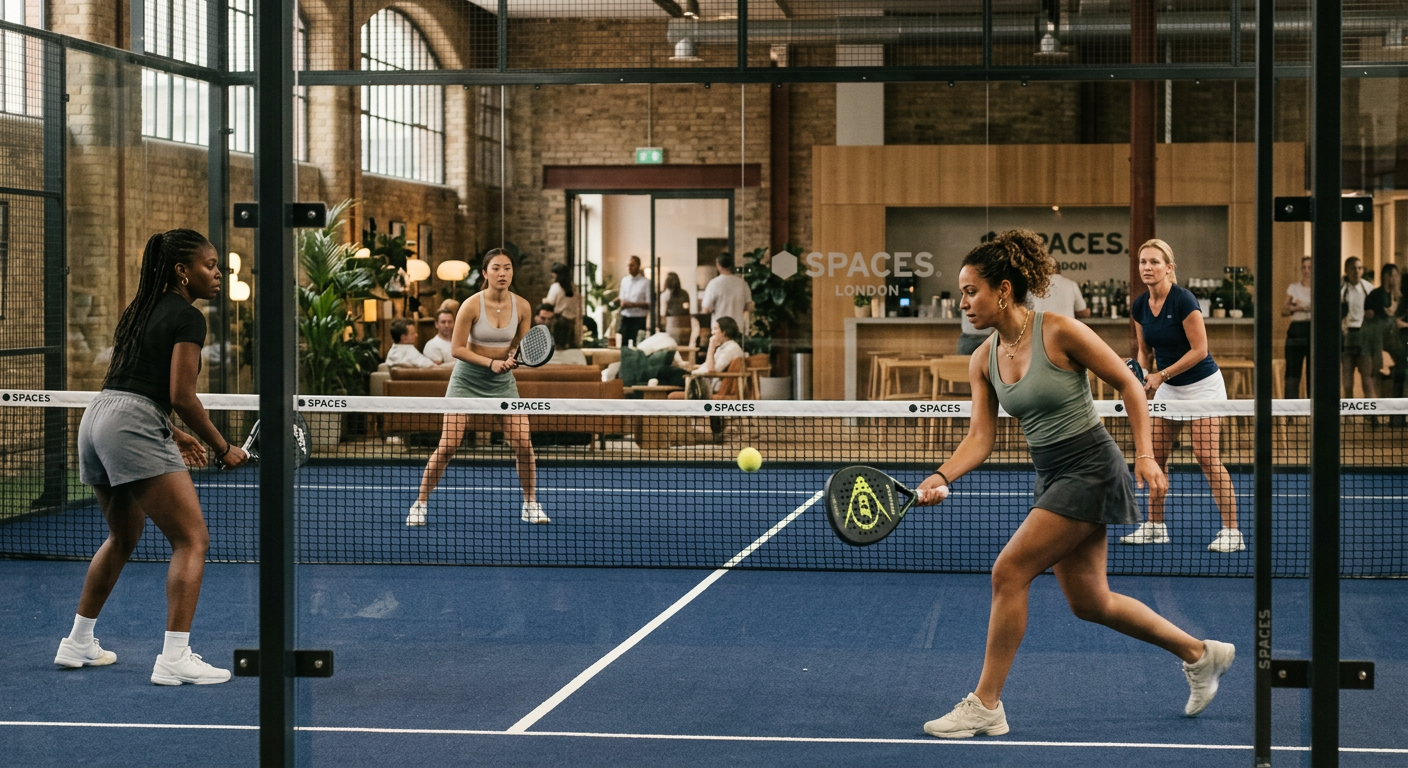
At the premium end of London's padel scene, something shifted in the social logic somewhere along the way. Padium, Padel Social Club in Earls Court and Greenwich, Racketeer in North Acton: these are operating with the aesthetic precision, the membership architecture, and the particular density of professional demographic that private members' clubs spend years cultivating. The difference is that padel did it faster and with considerably less fanfare.
What the Format Produces
The doubles format is doing structural work that a gym membership cannot replicate. Every booking is a relationship decision before it is a sporting one. Sixty to ninety minutes, four people, a shared score, and then the post-game café where the morning actually completes itself. The informal context that formal networking events spend considerable money trying to manufacture arrives here without engineering it. The social architecture is not incidental to the sport. It is the reason the right people keep booking.
Court times at the better venues sell out days in advance. Per-hour costs run from £25 to £45, with memberships from £33 per month at community-model clubs and considerably more at the premium tier. The pricing is one sorting mechanism. The aesthetic codes operating inside the room are another, and they work just as efficiently.
Who the Room Concentrates
The demographic active in premium London padel clubs overlaps precisely with the Women in Motion audience. This is not an aspiration gap, a room to aim for eventually. It is a room many of them are already in, without a framework for reading what it is.
The Harbour Club in Chelsea folds padel into its broader racquet sports and luxury leisure proposition, producing a different on-court social vocabulary than the community-model clubs. That difference is visible and intentional. The room self-selects through price, through geography, through the particular kind of person who books three weeks out because that is the only way to get the slot.
The Access Window
Joining an established London members' club in 2026 involves waitlists measured in years, introduction requirements, and joining fees that start at several thousand pounds. The premium padel tier has none of that friction yet. Access is still achievable, the social architecture rewards early presence, and the network being built inside these rooms is at an early enough stage that showing up now carries disproportionate relational value.
That combination does not hold indefinitely. The market is young, the rooms are good, and the window between knowing about an environment and it becoming too established to enter easily is currently open.
The Intelligence Read
No platform has filed the premium London padel club as a consequential environment yet. The sport is covered as fitness, occasionally as lifestyle trend, and the social architecture running underneath it has gone largely unexamined in print.
The members' club adjacency is the story. The preparation logic, the visual codes, the professional demographics, the access model before it closes up: these are the signals that matter for women deciding where to invest time and membership fees in 2026. The padel court has already made its decision about what kind of room it wants to be. The question is who noticed early enough to use it.