
The Future of Private Clubs: Layered Access Experience
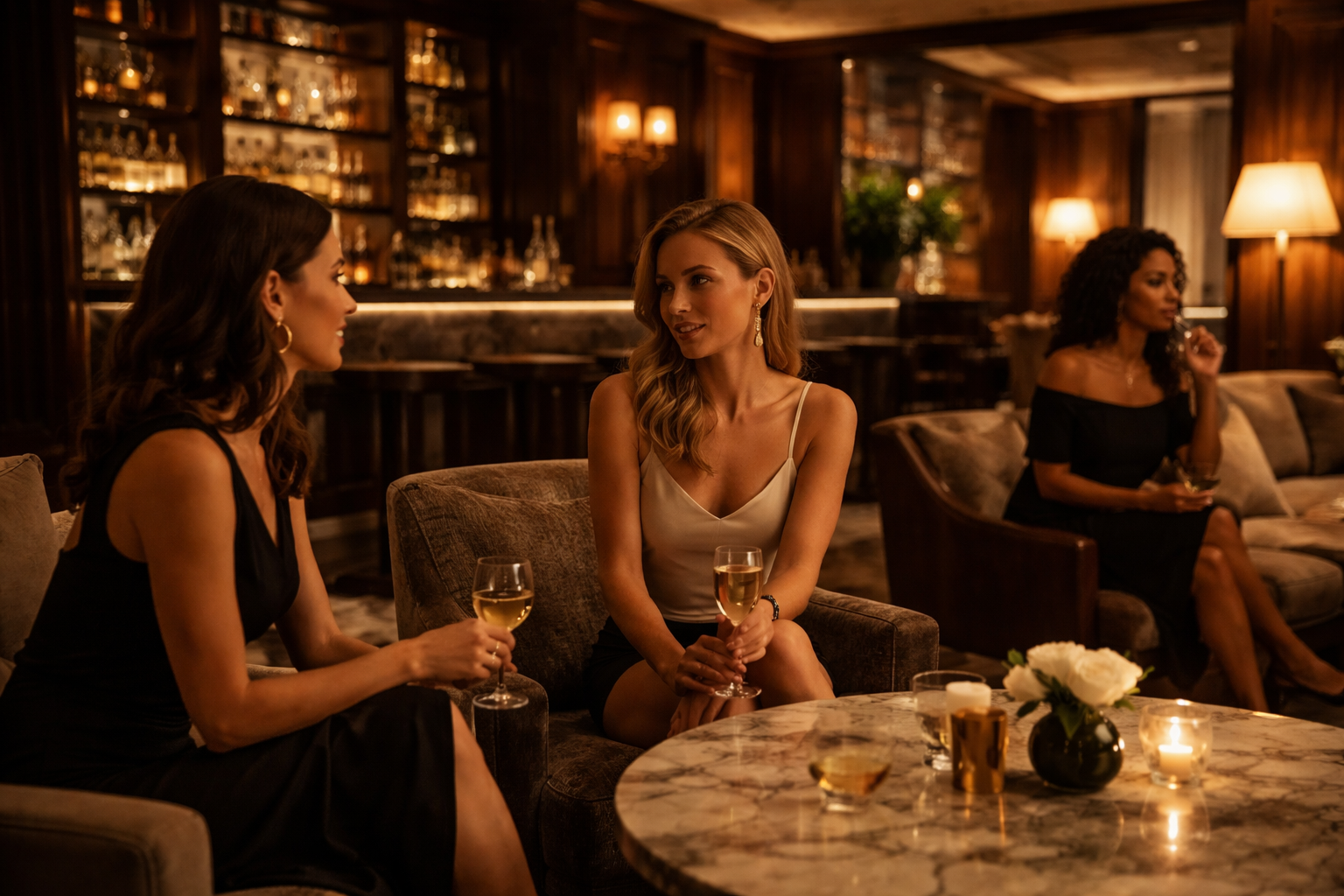
London now has more than 130 private members' clubs. The interesting question is how the best of them are quietly reorganising the terms of entry, and what that reorganisation reveals about where access culture is heading.
Estelle Manor Celeste opened in Notting Hill in February, in a restored townhouse on Ledbury Road. The format is specific: a members-only listening room and izakaya-style dining on the upper floors, and a ground-floor Italian-American restaurant open to anyone who wants to book a table. Two rooms, one building, different rules of entry. The logic behind it is worth examining carefully.
What Estelle Manor Celeste has built is a layered access model. The ground floor functions as a curated introduction, a controlled touchpoint with the brand's aesthetic, food, and atmosphere. The upper floors are where membership begins. You don't apply to join a room you've never experienced. You arrive at ground level, you understand what the place is, and then you decide whether you want more of it. The application, if it comes at all, follows that encounter rather than preceding it.
What the architecture is actually doing
Private members' clubs have historically operated on the premise that the barrier to entry is the point. The application process, the proposers, the waiting list, the committee review: these were never just administrative steps, they were the signal. Getting in meant you'd cleared a specific kind of social hurdle, and the hurdle itself conferred status.
That logic doesn't hold as well for the audience clubs most want to attract in 2026. Ambitious women in their thirties and forties, mobile and professionally established, are not particularly moved by hereditary access or legacy networks. They're moved by whether a room is worth their time and whether the people inside it are worth knowing. A blind application to an environment they've never seen asks them to take a significant leap of faith. A ground-floor restaurant asks them to spend an evening.
The application, if it comes at all, follows the encounter rather than preceding it.
Calibrated exposure and how it works elsewhere
Annabel's has been running something adjacent this spring, allowing non-members to book Michelin-starred chef Endo Kazutoshi's omakase pop-up through March to July 2026, at £245 per head. Historically one of the more impermeable clubs in London, Annabel's is using a world-class culinary event as a temporary bridge: you experience the room at its best, on a specific and finite basis, and the club's character does the rest of the work.
The mechanism differs from Estelle Manor's permanent ground-floor model, but the underlying logic is the same. Calibrated exposure rather than opaque exclusivity. Let the environment speak before the application form does. The women the best operators most want as members are precisely the ones least likely to apply cold to something they know nothing about.
What this signals about the rooms worth entering
London's club density has reached a point where identity clarification has become urgent. With more than 130 clubs operating in the same city, the differentiation that matters is no longer exclusivity in the traditional sense. The question shifts to what a club is actually for, and whether its answer to that question is legible before you commit.
The broader pattern across spring 2026 openings makes this explicit. Maslow's Kensington is designed around the idea that well-designed spaces help people think and work better. Six Senses Place at The Whiteley leads with wellness infrastructure as its primary membership proposition. Long Lane in the South Downs has removed alcohol entirely and positioned rest as the central offering. These are clubs that lead with what they're for, and the layered model fits neatly into that context. A ground floor that shows you exactly what the environment is, its food, its light, its pace, the kind of conversation happening at adjacent tables, is a form of honesty the older model of opaque application and committee deliberation was never designed to offer.
Estelle Manor Celeste opened quietly on Ledbury Road in February. The listening room upstairs is members-only. The pasta downstairs is available to anyone who wants to book. For a city with 130 clubs competing for the same audience, that arrangement is doing more strategic work than it might appear.