
The Club Where the Most Interesting Thing on the Menu Is Sparkling Water
Somewhere in the South Downs this spring, a private members' club is opening without a bar. The hospitality industry is watching with the polite fascination reserved for ideas that are either very stupid or very early.
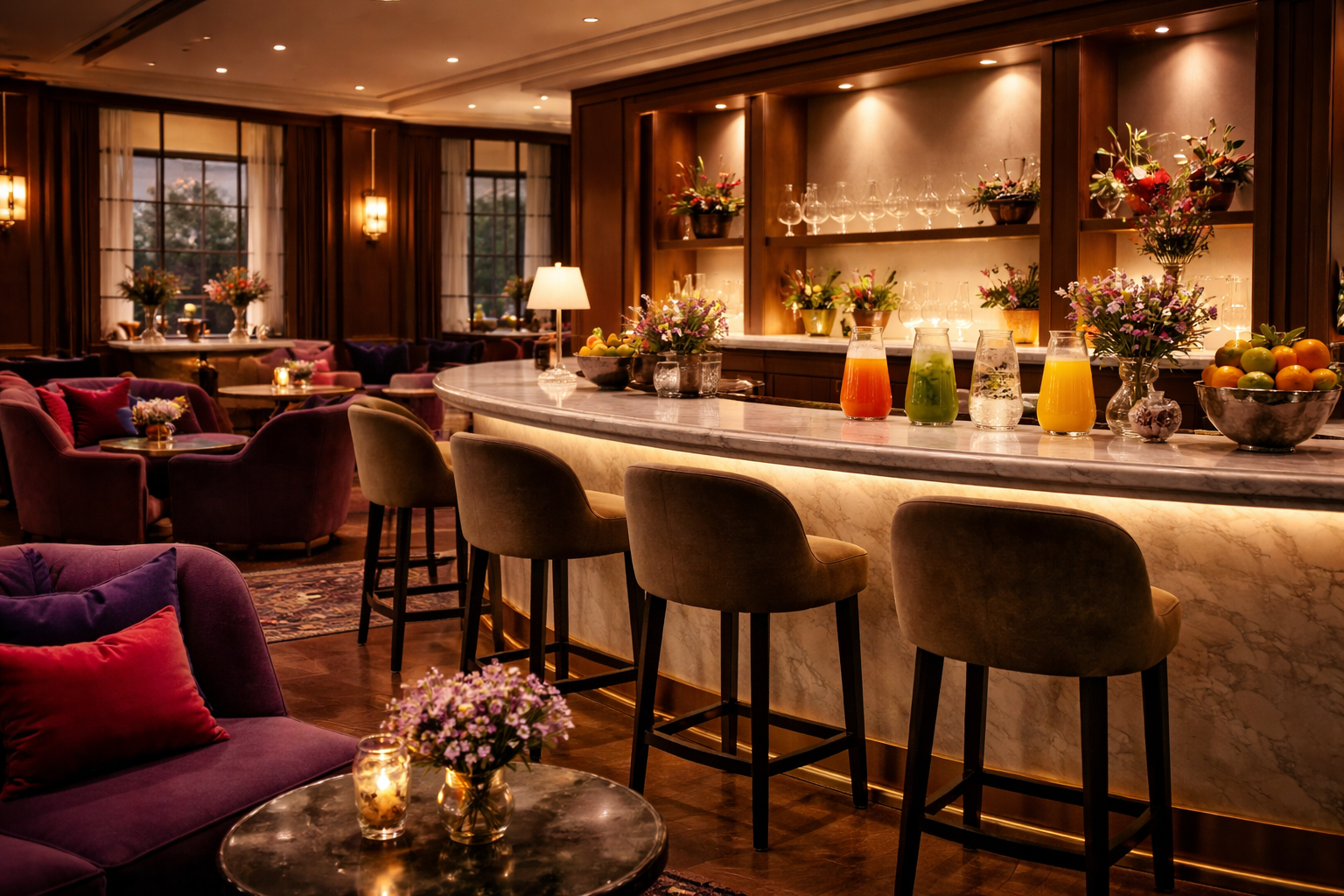
Somewhere in the South Downs this spring, a private members' club is opening without a bar. Long Lane has built its entire proposition around rest as a professional discipline, recovery as something you train for rather than collapse into, and an environment deliberately designed to make all of that feel less like deprivation and more like the obvious choice.
The hospitality industry is watching this with the kind of polite fascination reserved for ideas that are either very stupid or very early.
Clubs Have Always Known What They're Selling
The country house club has historically offered two things in one elegant package: a beautiful environment and a socially sanctioned reason to drink in it. The setting provides the alibi. The alcohol provides the ease. Together they create the particular atmosphere that makes people want to join, return, and bring guests they'd like to impress.
Long Lane has kept the beautiful environment and removed everything else that usually does the heavy lifting. What remains is the thing the category has always claimed to offer and rarely quite delivered: actual restoration. No decisions about whether to have another glass. No slow Tuesday morning in a four-poster bed wondering if the headache is the altitude or the Burgundy. Just the countryside, the recovery infrastructure, and whoever else decided this sounded appealing rather than punishing.
That last part is where it gets culturally interesting.
The Women Already Living This
There is a generation of high-performing women who have quietly, without making it a public identity or a sobriety narrative, simply stopped drinking very much. Not dramatically. Not as a programme. Just as a conclusion reached somewhere around the third year of back-to-back demanding weeks, when the cost-benefit of wine at dinner became genuinely difficult to justify against an 8am call with New York.
This shift has been largely invisible because it hasn't needed a language yet. Sober culture gave it one language, which many of these women don't particularly identify with. Wellness culture gave it another, which felt slightly earnest. Long Lane is offering a third option: membership infrastructure that treats the choice as unremarkable, builds an entire environment around it, and asks nothing in the way of explanation or declaration.
Joining a club is an act of identity. The access mechanic is always also a signal. Long Lane is betting that enough women are ready to make this particular signal, and that the country house format is the right vessel for it.
What the Timing Tells You
London's newest members' clubs have spent four years competing on professional utility rather than social theatre. Maslow's Kensington built around cognitive infrastructure. Six Senses Place around clinical recovery. The Sloane Club's relaunch around movement and modern membership rather than its original drawing-room legacy. The direction of travel has been consistent: rooms designed around what ambitious women actually need, rather than what club culture has traditionally assumed they want.
Long Lane is the logical end point of that trajectory, relocated to the countryside and made absolute. Whether it fills its membership list quickly will be genuinely instructive about where the culture actually sits versus where it says it sits. The waiting list, when it arrives, will be a more honest data point than any trend report.
The most telling thing about Long Lane isn't the absence of alcohol. It's that removing it was apparently the founding idea, the positioning statement, and the entire point. Someone looked at the country house club category and decided the most radical thing they could do was make it actually do what it promised.
That's either very brave or very well-timed. Possibly both.