
Navigating Airport Lounges: The Future of Access
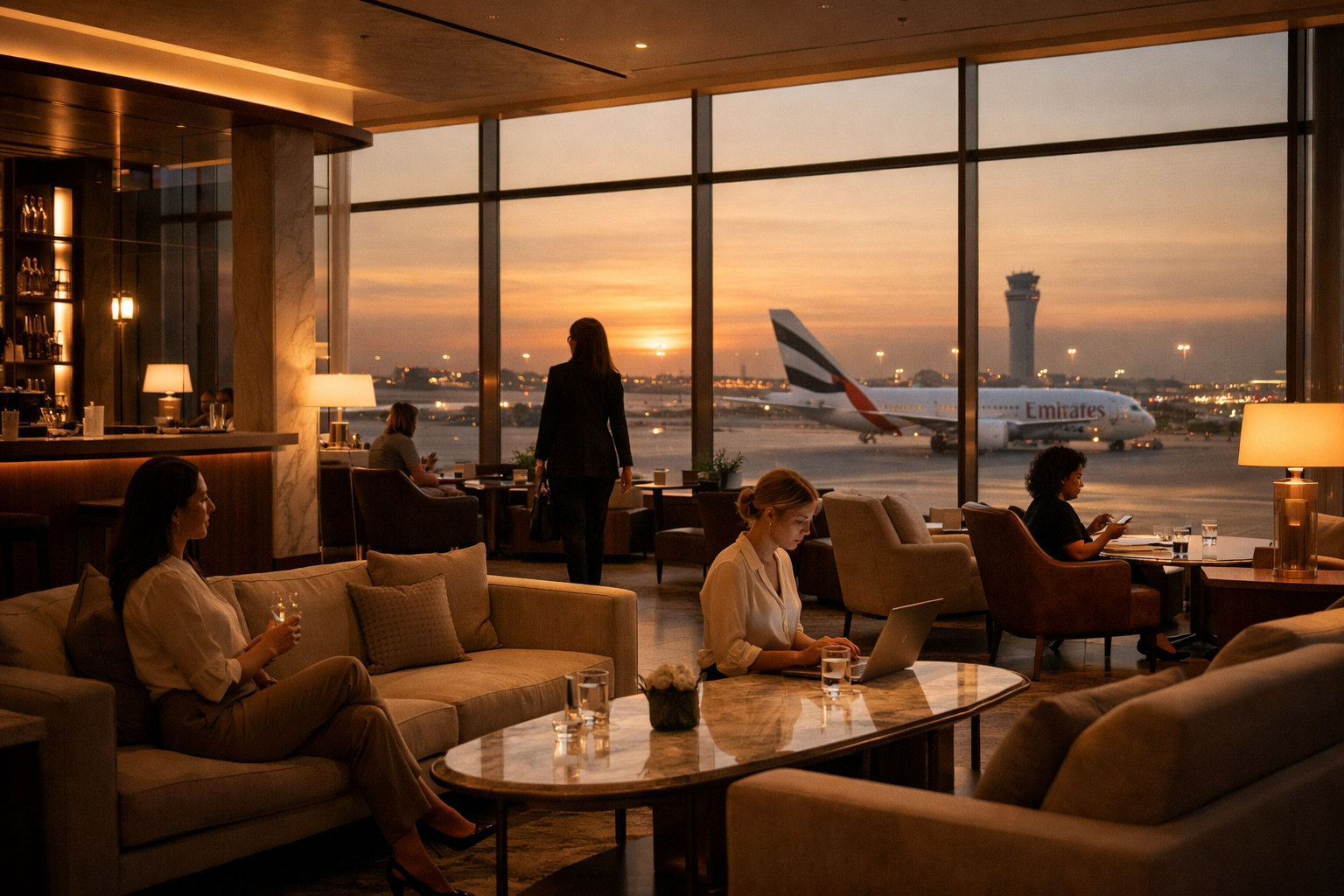
Lounge access used to be a biographical fact, a record of how many times you'd flown in the right seat, with the right airline, often enough to be granted it. In 2026, it's a plannable decision. That shift is worth paying attention to.
For most of its history, the airport lounge sat in an awkward position: technically premium, but functionally an accidental benefit. You got in because your employer bought the ticket, or because you'd logged enough miles to earn status you weren't quite sure you'd achieved. The lounge was somewhere you found yourself, not somewhere you chose.
What's happened over the past two years is a structural reorganisation of who gets in, and how. Lounge access has moved from a passive tier reward to an active decision, something that can be built into a travel strategy with roughly the same intentionality as choosing the hotel.
The credit card arms race and what it actually means
The most significant driver of this shift is the competition between financial products for ownership of the premium transit environment. American Express, Capital One, and Chase have each been expanding their lounge networks aggressively, producing a situation where lounge access is now available through a spending card rather than through airline loyalty alone. The American Express Centurion Lounge at JFK is expanding to over 17,000 square feet, its largest in the network, with a jazz bar and direct airfield views. Capital One's lounge at the same airport now operates 24 hours. The access is tied to a spending card, not a boarding pass, and that reorganisation of who qualifies is quietly significant.
The practical implication is that two women sitting in the same lounge may have arrived there via completely different routes. One has airline status accumulated over years. The other planned her card strategy around her travel pattern six months ago and walked through the same door. The room hasn't changed. The path to it has democratised.
Lounge fluency is now a learnable and plannable skill, not a passive indicator of seniority.
The day pass and what it signals about the new lounge user
Running parallel to the card network expansion is the growth of the pay-per-use model. JetBlue's BlueHouse lounge at JFK, the first airline lounge in the US with outdoor space, opened December 2025 and offers day passes from $59. Plaza Premium operates pay-per-use across multiple airports internationally. The pricing is deliberate rather than discounted, aimed at a traveller who has decided the lounge is worth planning for even without a loyalty programme behind her.
This creates a new category of deliberate lounge user. She isn't there because her employer put her in business class. She arrived with a specific duration of stay in mind, appropriate presentation, her work infrastructure in her bag, and a clear sense of what she needed to get done before boarding. The lounge, for her, is preparation infrastructure. Not an accident of corporate spend.
What's happening to the infrastructure itself
It's worth noting that the lounges these new access pathways are leading into are themselves being substantially rebuilt. Spring 2026 is the most significant moment in premium airport infrastructure in two decades. JFK's New Terminal One, a $19 billion development opening in June, houses Qatar Airways' first US lounge at 15,000 square feet and a relocated Turkish Airlines lounge at 11,000 square feet. Terminal 6 opens the same year with new spaces for Aer Lingus, Cathay Pacific, and Lufthansa. Heathrow has announced a full refurbishment of the British Airways lounge complex from 2026. Air France opens a new lounge at Terminal 4 this spring. Dubai International, consistently ranked first globally for airport luxury, is piloting self-driving pods connecting gates to lounge entrances.
The industry language around what lounges are for is also shifting. The framing now is "hybrid environments" that blend hospitality with productivity: biometric entry, AI-managed flow, personalised environment adjustment. Whether or not the technology lands cleanly, the intent is legible. Lounges are being redesigned as working environments and recovery spaces, not waiting rooms with better sandwiches.
The preparation logic this changes
For anyone thinking carefully about how they move through high-pressure travel days, the practical upshot is this: the gap between having access and not having it is now much smaller than it used to be, and much more within reach of deliberate planning. Lounge access is worth building into a travel stack, with some consideration for which one is actually worth using at which airport.
That shift from trophy to tool is the interesting part. The lounge used to signal something about your position in a hierarchy. Increasingly, it signals something about the quality of your attention to how you arrive, which is a different, and arguably more useful, thing to signal.