Minimalism's Current Form Requires More Wealth Than the Excess It Replaced
,
The global luxury goods market contracted by 2% in 2024, the first decline since the 2020 lockdowns. Over the same period, searches for "capsule wardrobe" rose 34% year on year, resale platforms reported 28% growth in designer basics, and waiting lists for unadorned £4,200 handbags stretched to 18 months. Minimalism has arrived as the new aspirational purchase, which means it has stopped being about having less.
The Price Floor
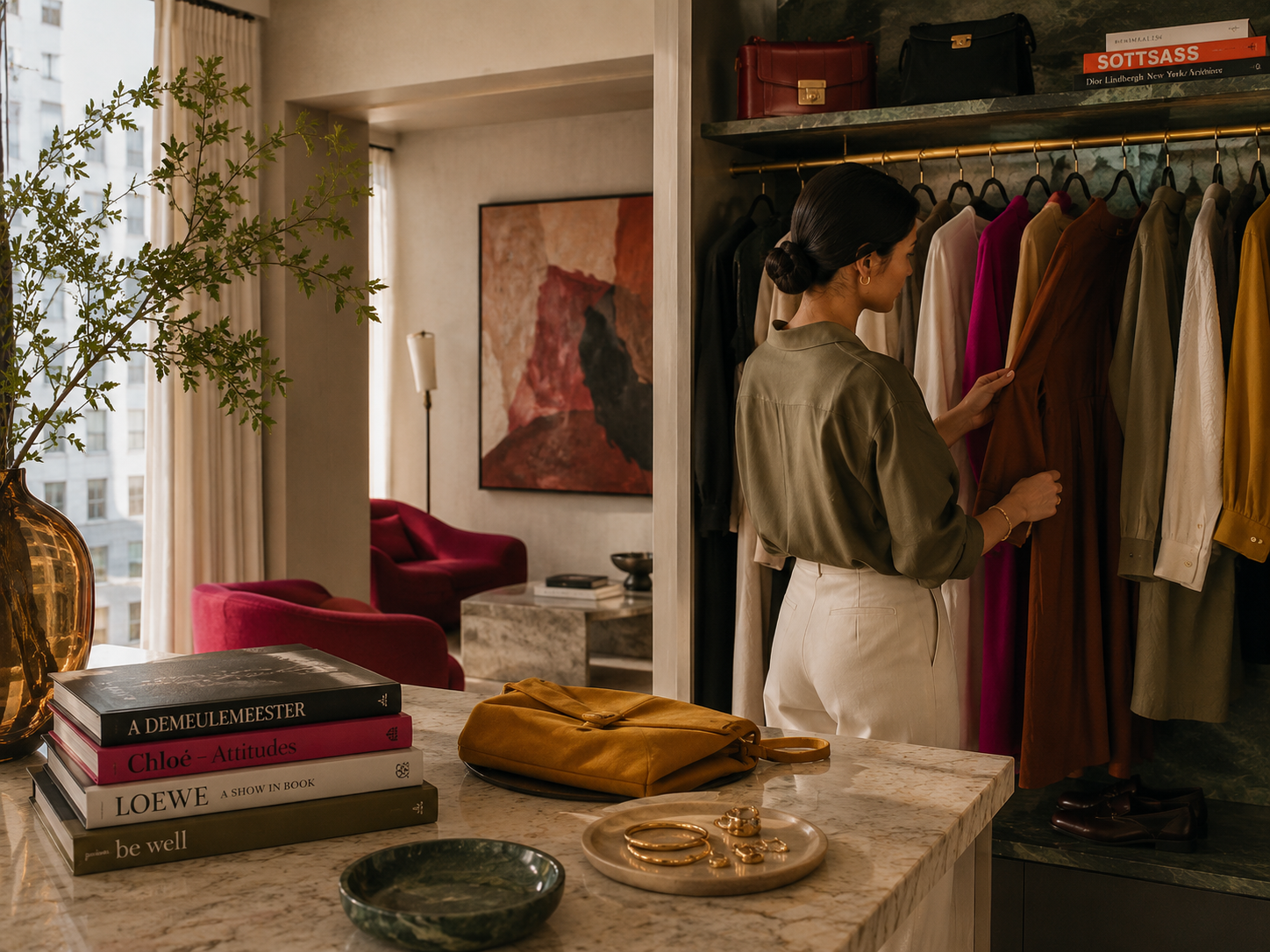
A minimalist wardrobe made up of twelve pieces from brands like The Row, Toteme, or Loro Piana costs a lot more than a closet full of clothes from most modern labels. It looks simple and restrained, but the price tag tells a different story. In 2026 a woman who owns six pieces worth £12,000 is sending a totally different message than one who owns sixty things for the same amount. The market has caught on and built itself around this idea.
The challenge is knowing what to keep when you cut down; that knowledge now costs as much as the clothes themselves. That knowledge can come from wardrobe consultants charging £300 an hour, personal shoppers on call, and stylists helping you pick out seasonal pieces. The minimalist look depends on clothes that fit perfectly, with the right proportions and fabric quality; things the average shopper can’t judge without an expert. It’s easy enough to spot minimalism when you see it, but buying that way? You either need a healthy wallet or years of buying, returning, and learning what a pro could tell you right away. The price of that learning curve? A closet full of forgotten mistakes.
The Sustainability Angle
Minimalism markets itself as the environmentally conscious choice, which it is, only if the twelve pieces last long enough to offset their production impact and higher per-item cost. A £2,000 coat worn 200 times delivers better cost-per-wear than a £200 coat worn twenty times, but that logic assumes equal access to £2,000 and ignores the reality that garment longevity often depends on care routines that are themselves resource-intensive. Dry cleaning, professional repairs, proper storage. The minimalist wardrobe is low-maintenance only if you can afford to outsource the maintenance. Sustainability became a selling point the moment it could be framed as premium, and minimalism gave it the aesthetic language to do that without looking try-hard.
What the Shift Tracks
Minimalism's rise mirrors the broader movement toward inconspicuous consumption, where status is performed through knowledge, access, and taste rather than visible branding. The explosion in minimalist aesthetics across fashion, interiors, and wellness tracks directly to the narrowing wealth gap visibility. Logomania belonged to an era when aspiration was about looking rich. Minimalism belongs to an era when aspiration is about looking like you don't need to try, and it is that confidence that comes from having enough to stop counting.
Minimalism became aspirational the moment it required resources to execute properly, and what it requires most is time. Time to research, time to wait for the right piece, time to build a wardrobe slowly. That kind of time is a luxury the aesthetic conveniently forgets to mention.