Gold. The Return of Considered Opulence
Gold jewellery feels steady in an unstable luxury market, offering material value, longevity, and reassurance as women choose pieces that hold meaning beyond trend cycles.
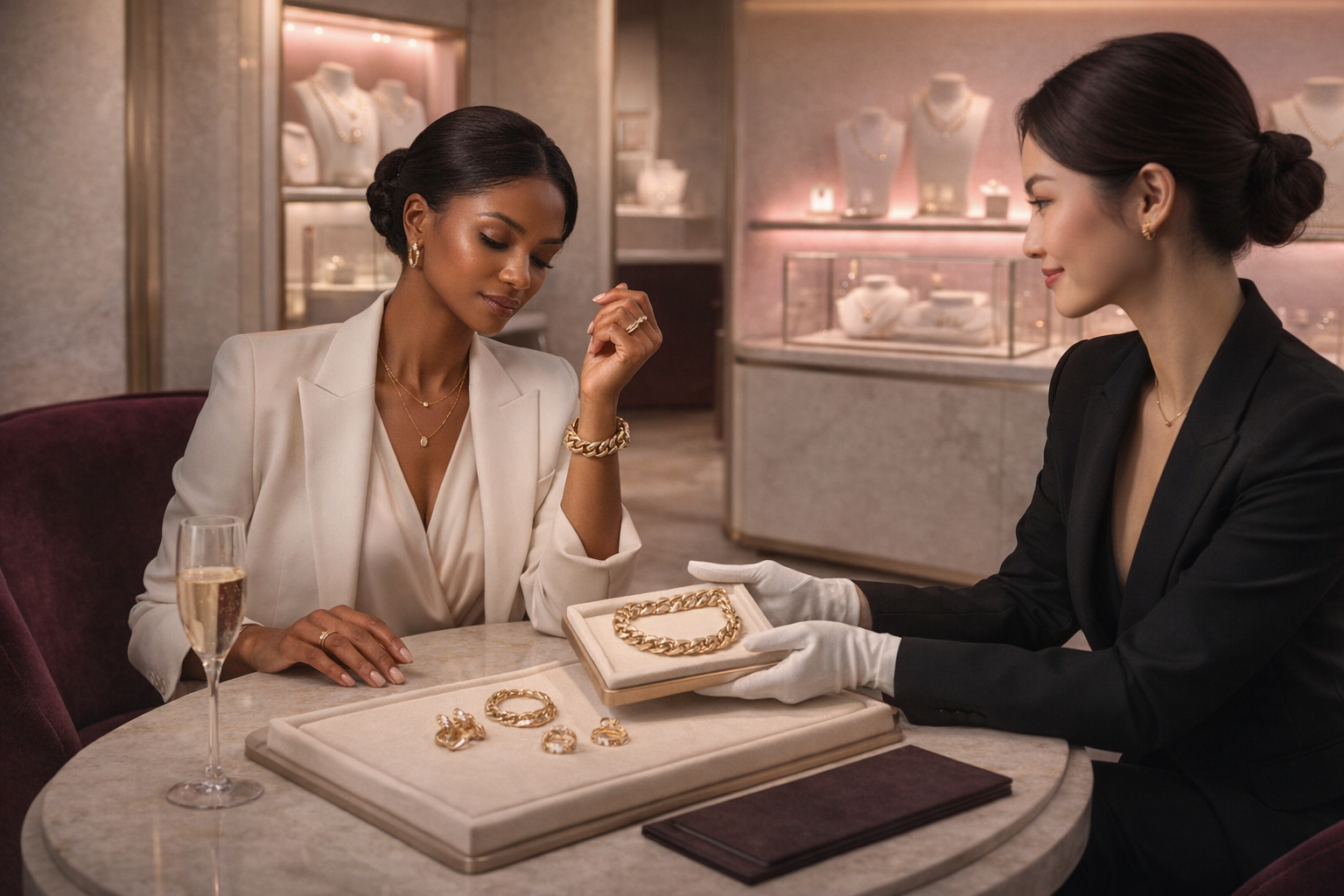
Gold jewellery has always been present in luxury, but it hasn’t always been this steady.
What’s changed is not taste, but behaviour. In a market shaped by price inflation, softened resale confidence, and shorter trend cycles, gold has started to feel unusually dependable. Not exciting. Not dramatic. Just solid.
That quality matters more than it used to.
When Luxury Started Feeling Unstable
Over the past few years, much of the luxury industry's growth came from price increases rather than volume. Consumers noticed. The relationship between cost and substance became harder to justify, even for high earners.
Against that backdrop, gold behaves differently. Its value doesn’t rely entirely on narrative or brand momentum. It carries material weight, historical continuity, and a sense of permanence that doesn’t need explaining.
In uncertain conditions, that kind of clarity feels calming.
Jewellery as a Quiet Form of Security
Unlike trend-led fashion or seasonal accessories, gold doesn’t ask to be kept up with. It doesn’t expire. It doesn’t require cultural alignment to feel relevant.
This is part of why jewellery is outperforming other luxury categories right now. Gold pieces feel defensible — emotionally and practically. They can be worn, stored, passed on, or sold. They sit comfortably between enjoyment and preservation.
That dual role is rare.
The Return of Considered Opulence
The February intelligence shows that quiet luxury hasn’t disappeared, but it has shifted. Extreme minimalism began to feel incomplete. Finishing details returned — not as excess, but as intention.
Gold fits neatly into that evolution. It adds weight without noise. Presence without performance. A sense of value without inviting scrutiny.
It reads as deliberate rather than indulgent.
Self-Gifting Changed the Meaning
Another subtle shift is who gold jewellery is being bought for.
More women are purchasing gold for themselves, marking milestones that don’t require an audience. The motivation isn’t romance or status. It’s recognition. A way of anchoring achievement in something that lasts.
This reframes jewellery from adornment to personal infrastructure — something that holds meaning quietly, over time.
Longevity Became Part of the Calculation
As resale markets expand and consumers think in longer horizons, durability has become more than a practical concern. It’s part of how luxury decisions are made.
Gold performs well in that context. It retains relevance across decades. It survives changing aesthetics. It resists the feeling of regret that sometimes follows trend-driven purchases.
In a landscape full of movement, that steadiness stands out.
What Gold Signals Now
Gold jewellery isn’t surging because it’s new. It’s resurging because it feels safe to want.
Not safe in a fearful way — safe in the sense of being grounded. Something that holds its place without needing constant justification. Something that can sit with uncertainty without amplifying it.
That’s why it matters right now.