
Admiralty Arch Has Always Known What Kind of Room It Is
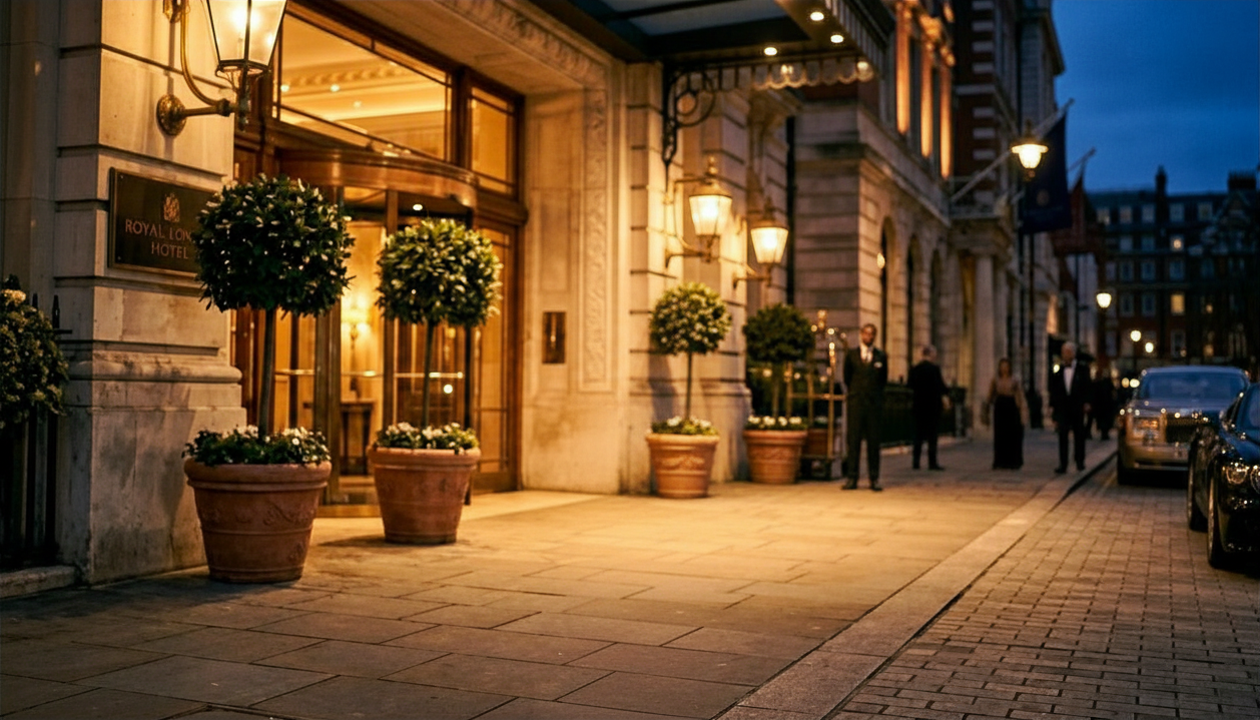
There are buildings that become significant when the right tenant moves in. Admiralty Arch is not one of them. The Grade I listed monument at the end of The Mall, commissioned by Edward VII as a memorial to Queen Victoria and completed in 1912, arrived with its authority already intact. The Waldorf Astoria opening inside it in 2026 is not the story. The story is what happens when one of the most institutionally loaded addresses in London opens its doors to a paying guest for the first time.
One hundred rooms. Michelin-starred kitchens from Clare Smyth and Daniel Boulud anchoring the food and beverage. A spa, a pool, a cigar lounge. The hospitality infrastructure is considerable. But the Waldorf Astoria brand did not need to bring prestige to Admiralty Arch. It needed to be careful not to dilute it.
What Institutional Authority Actually Feels Like
There is a specific quality to rooms that carry pre-existing civilisational weight. The Admiralty Arch processed state funerals and royal processions before it processed check-ins. The building sat at the operational centre of British naval command for decades. That history is not decorative. It is structural, embedded in the stone and the proportions and the particular silence of a space that has always understood its own importance.
The premium hotel market in 2026 is full of properties competing on heritage: original features, listed status, proximity to something historically significant. Admiralty Arch is operating in a different category. The building is not adjacent to institutional authority. It is institutional authority, and the hotel is the newest layer of a very long story.
The Room It Creates
The relevant question for the Women in Motion lens is not whether the Waldorf Astoria Admiralty Arch is a good hotel. It will be. The question is what kind of room it creates socially and professionally, and for whom.
A hundred rooms in a building of this scale and significance produces a particular intimacy. This is not a landmark property competing on size or spectacle. The guest-to-space ratio, the address, the food and beverage anchors: these are the ingredients of an environment where the people in the room have been selected for by the price point and the cultural fluency required to understand why the address matters. That combination tends to produce consequential conversations.
The spa and wellness infrastructure positions it within the clinical wellness direction the premium hotel market is moving toward, though the Admiralty Arch proposition is less about biohacking and more about the particular composure of a building that has always been above the need to announce itself.
The Timing
Admiralty Arch joins a specific cohort of London openings in 2026, including Six Senses at The Whiteley and The Newman in Fitzrovia, that are collectively raising the benchmark for what a premium hotel stay is expected to deliver. The difference is that Six Senses and The Newman are new propositions building their authority from scratch. Admiralty Arch walked in with a century of it already deposited.
For the woman whose professional life takes her through rooms where the address still carries meaning, this one is worth understanding before it becomes shorthand. The building has always known what kind of room it is. The hotel just made it bookable.